Climate adaptive winegrowing
Research conducted across these sites focuses on the central challenge of climate-adaptive viticulture: managing water in a regime of extremes. The Occitanie vineyard received 200 mm of rain in all of 2025 and over 1,000 mm in the first five months of 2026 — the same site, eighteen months apart. Developing techniques that handle both requires working with the landscape: increasing water infiltration and storage through ditches and slope adaptation, building soil water-holding capacity, and using vetiver, green cover, and trees to regulate drainage biologically. Alongside water management, the research covers biodiversity-driven pest and disease regulation, soil biology, and the enological consequences of low-intervention winemaking — including the uptake and transport of soil yeasts through the vine to the grape.
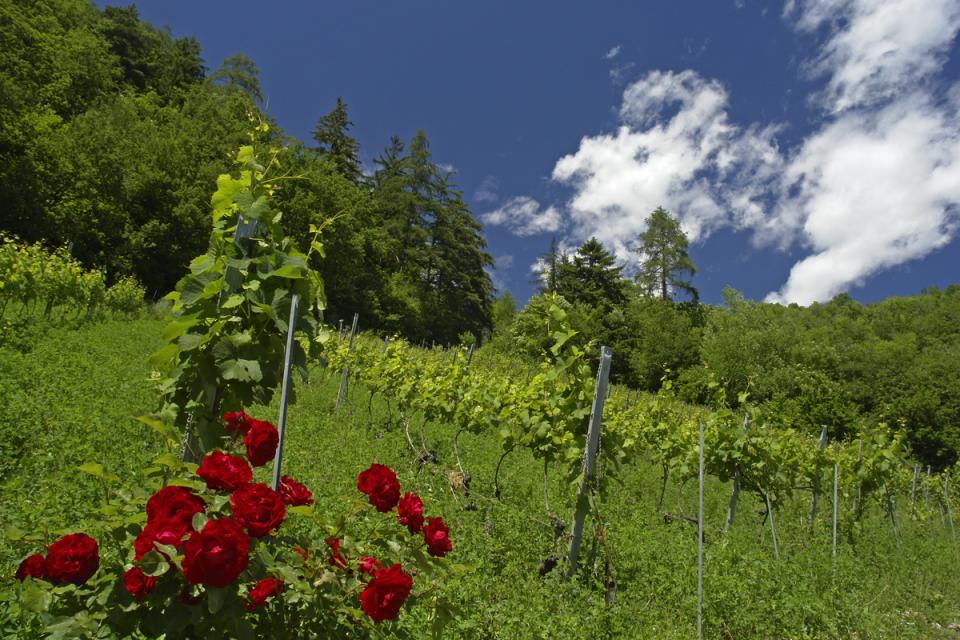
In 2009, the institute introduced the first guidelines and label for viticulture in high biodiversity, since adopted by over 100 wine-growing companies across eight European countries. The underlying principle — that a vineyard managed as a functioning ecosystem produces more resilient vines and more complex wines — has guided all of Mythopia's work since.
The Domaine de Mythopia is the Ithaka Institute's vineyard and the place where most of our field and ecosystem trials are conducted. Despite its strong links to the institute, Mythopia is an independent company specialised in natural winemaking. The wines and vineyards are presented on the Mythopia website. The research is documented in the viticulture section of the Ithaka Journal.