Project countries

Benin

by Harald Bier

The GIZ-project is part of the special initiative "One World, No Hunger" of the German Federal Ministry for Economic Cooperation and Development (BMZ). In Benin, the Ithaka Institute was engaged to focus on the introduction and adoption of biochar based fertilization. The initiative contributes to two main objectives, firstly eradicating hunger and malnutrition and, secondly promoting sustainable agriculture so that...

Bangladesh

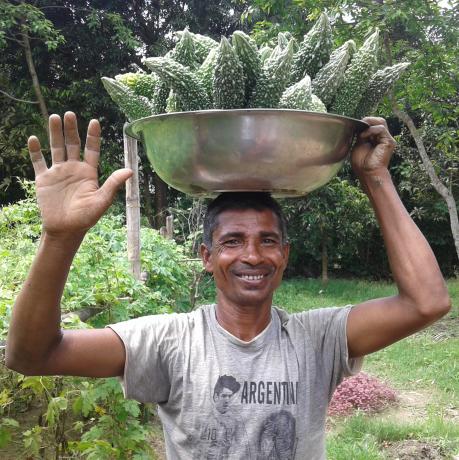
Biochar-Urine Nutrient Cycling for Health

The University of Heidelberg, BRAC University (Bangladesh) and Ithaka Institute collaborate in a LANSA financed project on organic nutrient cycling to enhance homestead food production for improved nutrition in nine rural villages in Bangladesh. 

Timor Leste - Biochar for Coffee

by Johannes Meyer zu Drewer

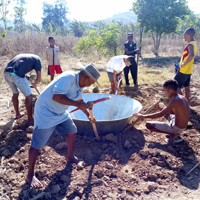
In tropical countries, the implementation of innovativ new methods may face important hurdles due to unavailability of construction materials, technology, water, fertilizers, and through economic and transport logistic limitations. How to overcome successfully those limitations was shown in a case study in Timor-Leste where a Biochar pilot project, nested into the smallholder-based coffee value chain, was...

Cuba

Our project combines since 2017 the recycling of organic waste materials with the production of food, feed, and bio-based energy in the context of Cuba, a country that progresses like only a few others towards a more sustainable and increasingly organic agriculture.

Ghana

Future of Biochar in Cocoa Systems

Cocoa is one of the major tropical cash crops suffering from degraded and often too acidic soils. Biochar based fertilization has the potential not only to improve yields and crop health but to turn cocoa agroforestry systems into carbon sinks to mitigate climate change. In 2020, Ithaka started a large demonstration project in Ghana to showcase the biochar potential and deliver the scientific data for political and...

Nepal

The first biochar country

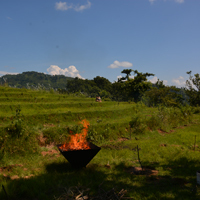
Nepal is our country of heart, and it was the greatest of honors to start working on soil fertility in the Himalayas within the framework of an Asia Development Bank project in 2014. It was in Nepal that we introduced for the first time the Kon-Tiki biochar method on a field and farm scale. It was in Nepal that we showed how organic biochar fertilizer made at the farm just in front of the cattle shed could, on...